

Beyond "low-carb" is where this gets useful. Most advice on carb friendly meals treats carbs as the villain and the plate as the whole story. That misses the bigger point. The better question isn't just how many carbs you removed. It's what replaced them, how satisfying the meal is, and whether your bloodwork trends improve.
A carb-friendly approach works best when it's built on portions, not fear. University Hospitals lists practical meal targets of 45 to 60 g of carbohydrates per meal for women and 60 to 75 g per meal for men, with 15 g per snack, and the CDC counting convention behind that system is simple: 1 carbohydrate choice equals 15 g of carbohydrate, as outlined in this carb counting nutrition guide from University Hospitals. That means carb friendly meals can still include foods like bread or an English muffin. The point is balance.
That's also why the endless keto-versus-low-carb debate is often less helpful than people think. Keto is one strict version of carb restriction, not the only useful one. If you want a quick framing of that distinction before you build your meals, Rip Van has a helpful keto diet comparison.
Goodlabs is a health platform that gives blood donors free clinical-grade lab panels (run at Quest or LabCorp), and offers the same panels at low cost to anyone who doesn't want to donate. Used well, that gives you something most diet advice never gives you: a feedback loop. You eat, you test, you adjust. The meals below are built for that mindset. They aren't just lower in carbs. They're designed to give you something worth tracking.
1. Grilled Salmon with Asparagus and Lemon Butter
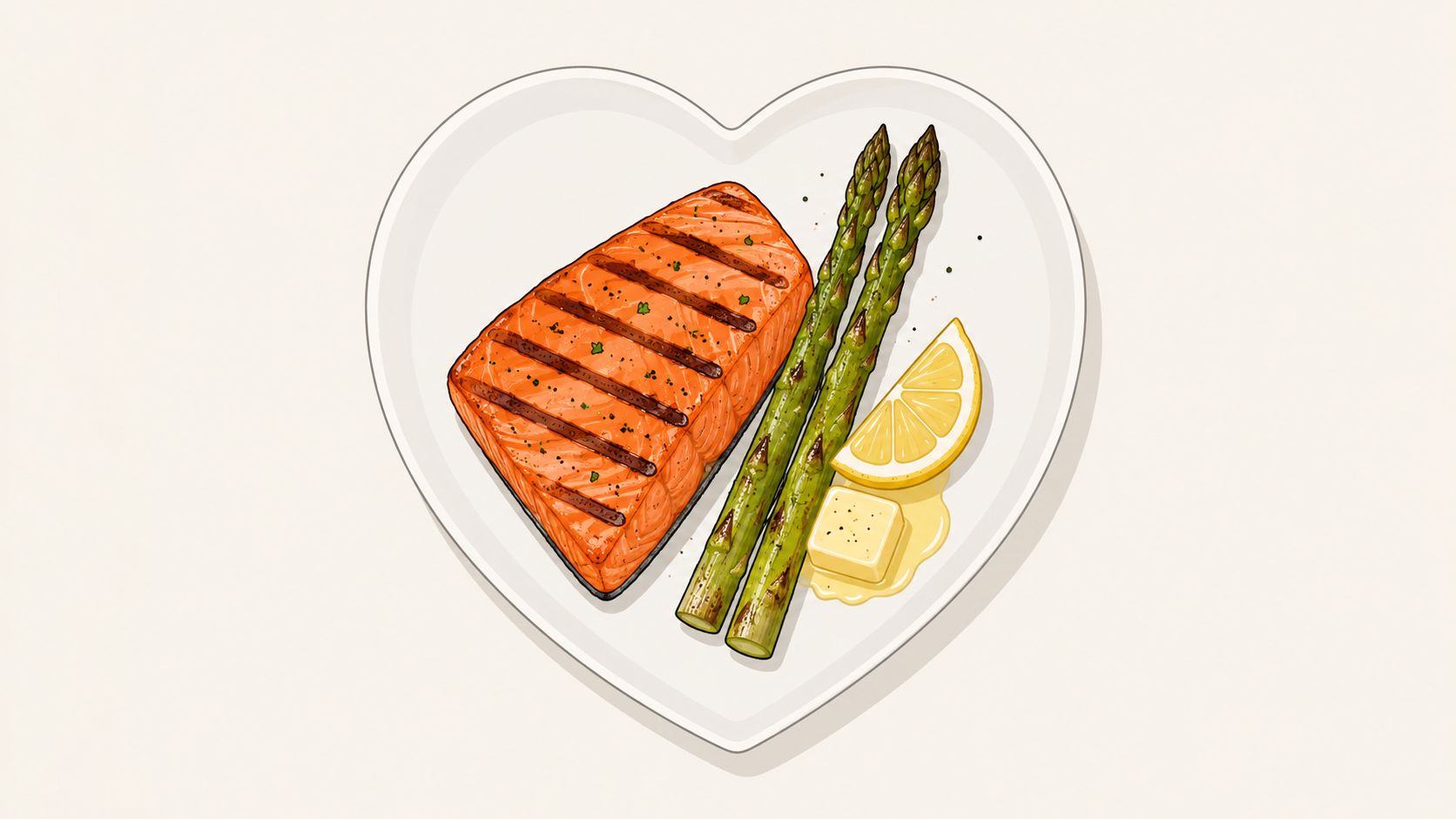
Salmon is one of the easiest carb friendly meals to justify on both taste and biomarker logic. You get protein, a naturally low-carb structure, and a meal that doesn't need processed substitutes to feel complete. Asparagus adds volume and fiber without pushing the carb load much higher.
For readers tracking cardiovascular risk, this is one of the cleaner dinner templates to repeat. In practice, I like it because it removes the usual low-carb trap of replacing starch with a pile of cheese and calling it health optimization. Fish, vegetables, acid from lemon, and enough fat to make the meal satisfying is a better pattern.
Why it works
Cook the salmon hot and relatively fast so it stays moist. Roast or grill the asparagus until it's tender but still has bite, then finish with lemon and butter. If you tolerate dairy well, butter works. If you don't, olive oil is an easy swap.
Practical rule: If a low-carb meal improves satiety but leaves your vegetable intake collapsing, it usually won't support better long-term markers.
This is a strong option for someone following changes in triglycerides, inflammation, or broader metabolic trends over time. If that's your focus, Goodlabs has a useful primer on metabolic health markers worth watching.
A real-world use case is the athlete or busy professional who needs a default dinner that doesn't create a post-meal energy dip. Salmon does that better than many heavier red-meat meals, especially at night.
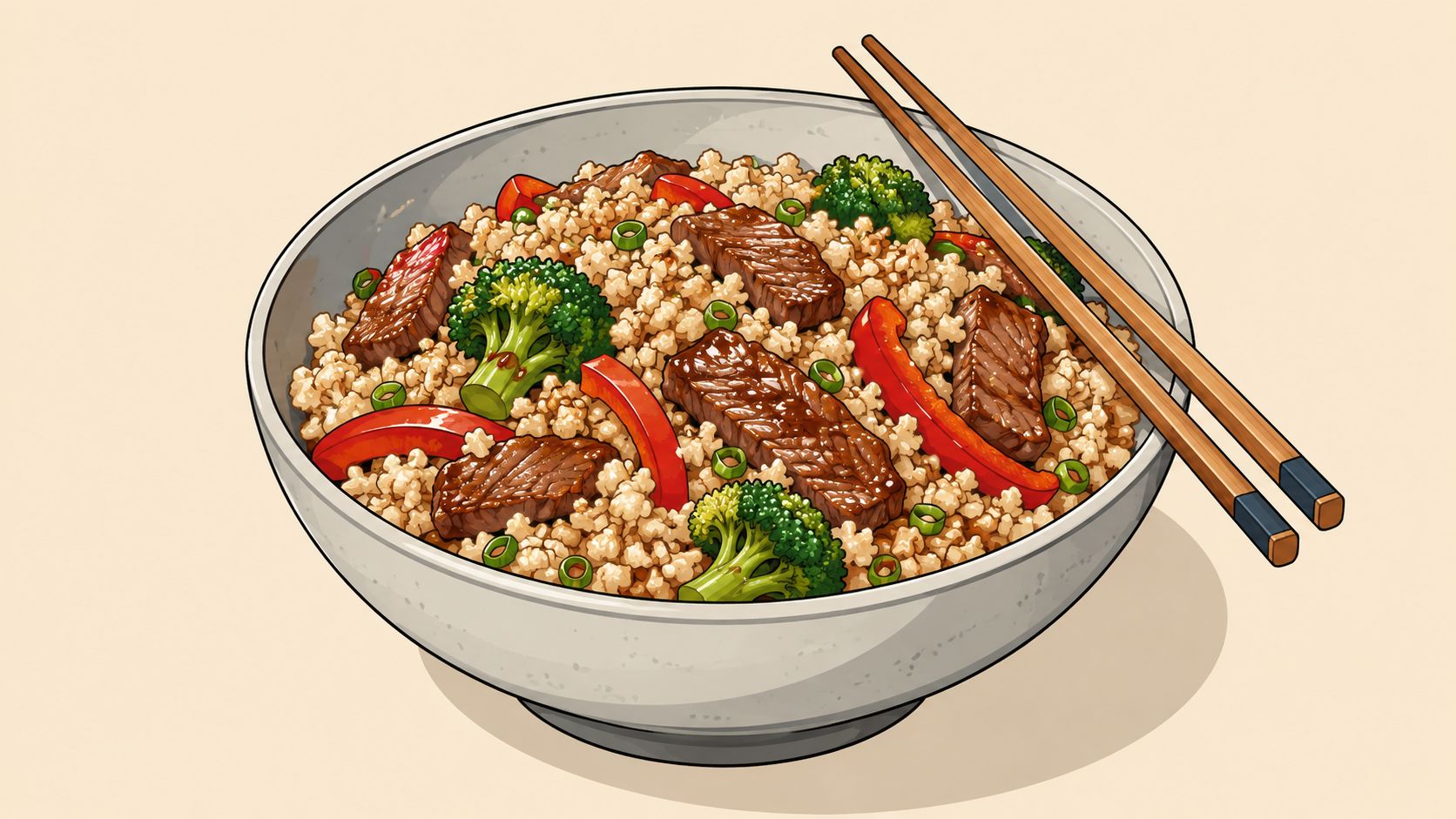
2. Cauliflower Rice Stir-Fry with Grass-Fed Beef
The reason cauliflower rice keeps showing up isn't trend fatigue. It's utility. When it's cooked properly, it absorbs flavor well, keeps overall carbohydrate load lower than a grain-heavy stir-fry, and gives you room to include a broader range of vegetables.
Pairing it with beef makes the meal more anchoring. That matters because carb friendly meals fail when they feel like punishment food. A skillet with beef, cauliflower rice, broccoli, bell peppers, ginger, garlic, and tamari tastes like dinner, not a compromise.
What to watch
The weak version of this meal is dry beef and soggy cauliflower. Use a very hot pan, cook the beef first, remove it, then cook the vegetables quickly so they stay intact. Freshly pulsed cauliflower usually holds texture better than the mushy frozen versions.
Build in color: Add broccoli and peppers so the meal doesn't become a beige low-carb cliché.
Season aggressively: Garlic, ginger, sesame oil, and tamari do more for adherence than another "clean eating" lecture.
Track the right outcome: If you're eating this for body composition and energy stability, compare how you feel after this meal versus a rice-heavy takeout stir-fry.
For someone watching fasting glucose, insulin resistance patterns, or broader nutrition-linked trends, a metabolic health test through Goodlabs can help connect the meal pattern to actual lab feedback.
This is one of the better weeknight options for lifters, shift workers, and anyone who wants a high-protein dinner without a late-night crash.
3. Zucchini Noodle Pad Thai with Shrimp
A lot of zucchini noodle dishes fail because they imitate pasta badly. Pad Thai is a better use of zoodles because the sauce, lime, herbs, and shrimp do most of the work. You don't need the zucchini to pretend it's wheat noodles. You need it to carry flavor and add freshness.
Shrimp makes this meal especially practical for carb-conscious eating because it cooks fast and stays light. That can be useful if you prefer a lower-carb dinner but don't want a heavy, fatty meal sitting in your stomach before bed.
How to keep it from turning watery
Salt the zucchini noodles first and let them sit briefly, then blot them dry. Cook them quickly. If you linger, you get soup.
The sauce matters more than the noodle substitute. A coconut-based sauce with lime, fish sauce, and peanut or almond butter gives this meal enough richness to feel satisfying. Keep the sweeteners minimal.
For readers who are experimenting with lower-carb patterns but don't want to live in full keto, it's worth remembering that keto is the stricter version. It traces back to the 1920s as a therapeutic diet for epilepsy and is often described as about 75% fat, 20% protein, and 5% carbs, with many plans limiting intake to 20 to 30 g of carbs per day, according to this global keto diet trends summary.
Here's a visual if you want a fast cooking reference before trying your own version.
A practical scenario here is the person who loves takeout flavors but wants tighter control over ingredients and post-meal energy. This dish gives you that without forcing a joyless plate.
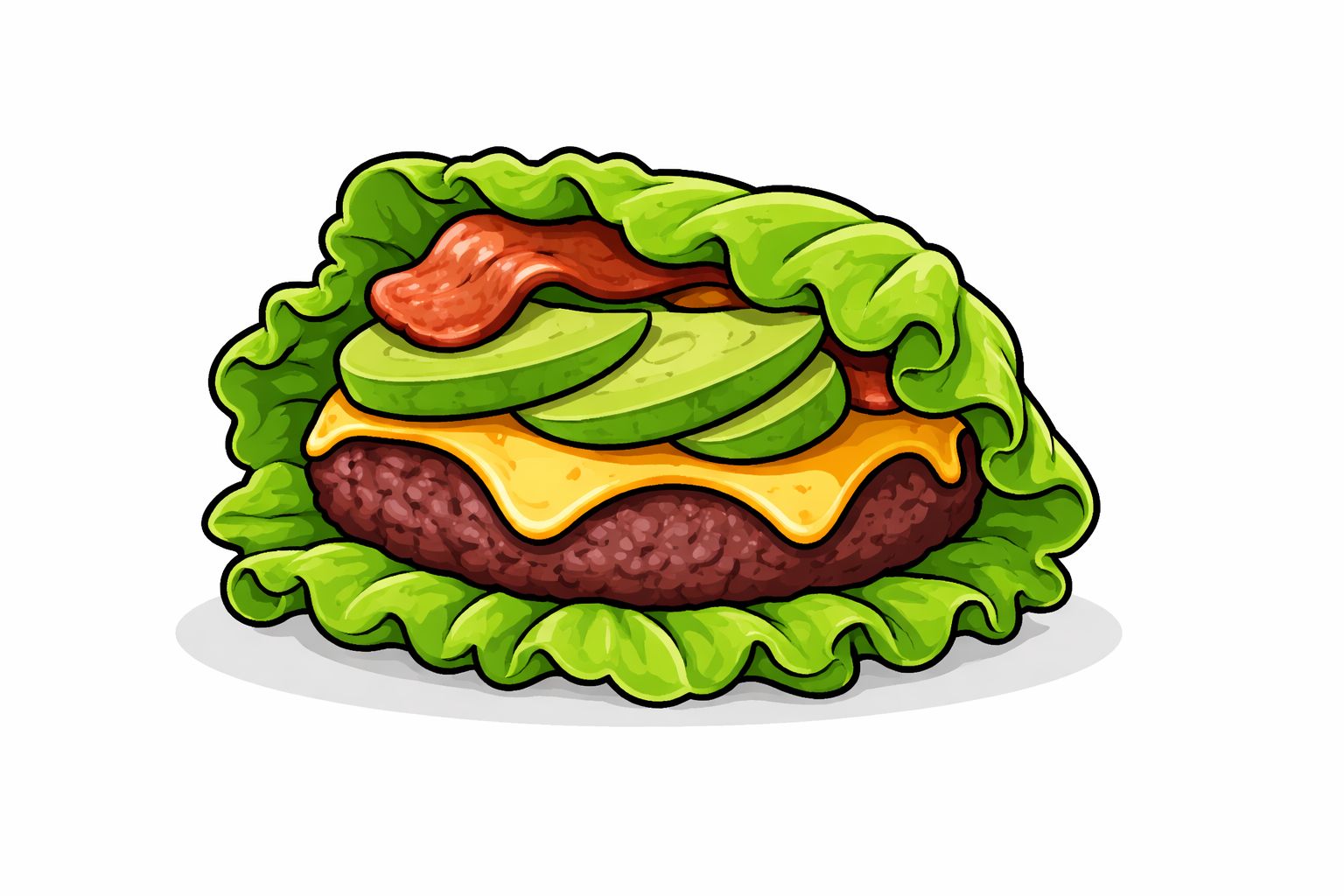
4. Bunless Burger with Avocado, Cheese, and Bacon
This is the meal that proves carb friendly meals can still feel familiar. Order a burger without the bun, wrap it in lettuce, add avocado, cheese, bacon, pickles, and mustard, and you've got something that works at home or at a fast-casual spot.
That convenience is its biggest strength. A diet only works if it survives a Tuesday lunch, an airport, or a rushed dinner. Bunless burgers do.
The trade-off most people ignore
Removing the bun doesn't automatically make the meal biomarker-friendly. A burger built around processed bacon, low-quality oils, and no fiber can still be a poor everyday choice. Avocado helps. Lettuce helps. Pickles and onions help. The better version has actual produce on it.
A bunless burger is a useful tool, not a health halo.
If you're using this meal often because you're trying to flatten glucose swings, it's smart to track whether the pattern is moving the right markers for you. An HbA1c test from Goodlabs can provide one piece of that picture over time.
This meal fits well for road trips, social events, and restaurant meals where "perfect" isn't realistic. What works is consistency. What doesn't is pretending every bunless burger is automatically a metabolic win.
5. Egg Roll in a Bowl with Ground Turkey
This is one of the best examples of low-friction cooking. Brown ground turkey, add cabbage or slaw mix, garlic, ginger, soy sauce or coconut aminos, sesame oil, and finish with scallions. Dinner is done in one pan.
It works because cabbage gives you volume. That volume matters when people try to cut carbs and end up under-eating produce, over-snacking later, and blaming the diet instead of the meal design.
Why it works for weeknights
Turkey keeps the dish lighter than pork-heavy takeout egg rolls, and the cabbage carries more nutritional value than people give it credit for. If you want more depth, add mushrooms or a spoonful of chili crisp. If you want more staying power, top it with a fried egg.
A family managing mixed preferences can use this meal well. One person can eat it as-is. Another can add rice. That's a practical advantage because not everyone in a household needs the same carb target.
Use whole cabbage when possible: Pre-shredded slaw is convenient, but a fresh head of cabbage often tastes better and usually costs less.
Add fermented elements: Kimchi on the side can make the meal feel more complete.
Don't fear strategic carbs: If the meal leaves you hungry two hours later, adding a measured carb portion may work better than white-knuckling it.
That's especially relevant because cost is still one of the weakest areas in low-carb advice. Budget-focused coverage points out that carb-conscious eating often gets framed as expensive, while practical ingredients like cabbage, frozen vegetables, beans, legumes, and cauliflower rice can lower the cost barrier, as noted in this budget-friendly low-carb recipe roundup.
6. Spinach and Feta Stuffed Chicken Thighs with Olive Oil
Chicken thighs are underrated in carb friendly meals because they solve the flavor problem naturally. Breasts are leaner, but they dry out fast and often need more effort to stay satisfying. Thighs are more forgiving.
Stuff them with spinach and feta, roast them in olive oil, and you get a dinner that feels restaurant-level without specialty ingredients. It also travels well into leftovers, which makes it useful for meal prep.
A smarter way to think about low-carb
This meal works because it doesn't confuse "low-carb" with "all meat." Spinach adds bulk and micronutrients. Olive oil improves texture and satiety. Feta gives salinity and enough richness that you don't need a heavy sauce.
What works: Meals that lower carb load while increasing food quality.
What doesn't: Meals that lower carb load by removing plants and replacing them with processed fat bombs.
A good real-world use case is the person who wants a Mediterranean feel without defaulting to pasta or potatoes. Roast a tray of thighs, add a side salad or extra vegetables, and you've got an easy dinner anchor for several days.
If you're tracking lipids, inflammation markers, or liver-related trends, this kind of meal is often a better long-run pattern than low-carb convenience products. You can recognize the ingredients.
7. Beef Bone Broth with Liver and Mushrooms
This is the most polarizing meal on the list. People either love the nutrient-density logic or stop at the word liver. Fair enough. But for someone who tolerates organ meats, this bowl can be unusually efficient.
Bone broth gives warmth and hydration. Mushrooms add texture and savory depth. A modest amount of liver brings a lot more nutritional weight than another plain bowl of broth.
When this meal makes sense
This isn't the meal to force every night. It's the meal to use strategically. If you're trying to improve dietary variety, build around nutrient-dense foods, or recover after periods of low-quality eating, it has a place.
The key is restraint. Too much liver overwhelms the bowl. Small pieces folded into a well-seasoned broth with shiitake or maitake are more realistic for repeat use.
For blood donors and people paying attention to iron status or broader micronutrient patterns, Goodlabs has a useful overview of common nutrient deficiencies and what to watch.
A practical version for busy adults is to make broth ahead, freeze portions, and add sautéed mushrooms and liver just before serving. Done well, this feels restorative. Done badly, it tastes like punishment.
8. Cabbage Steaks with Garlic Aioli and Bacon
Cabbage is one of the most underrated low-carb foods because it is cheap, stores well, and changes dramatically with heat. Roast thick slices until the edges caramelize and the center softens, then top with garlic aioli and crisp bacon.
That gives you a meal with crunch, softness, fat, and salt. In other words, the things that keep people from raiding the pantry later.
How to make it more than a side dish
On its own, cabbage steak can feel like a side. To make it a true meal, add enough protein. Bacon alone usually isn't enough. A couple of eggs, grilled chicken, or leftover salmon makes the plate more complete.
This is also where the fiber conversation matters. Some low-carb meal plans lean so hard into meat, cheese, and eggs that fiber subtly disappears. That's not a small issue. Healthline's review of healthy low-carb foods takes the more useful position here: lower-carb eating works better when it deliberately includes vegetables, legumes, nuts, or other higher-fiber plants rather than just ultra-low-carb swaps, as explained in this healthy low-carb foods guide.
Roast cabbage until the edges get dark. Pale cabbage is steamed cabbage pretending to be roasted.
A strong use case is the budget-minded cook who wants carb friendly meals that don't rely on expensive snack bars, specialty tortillas, or keto desserts. Cabbage does real work for very little money.
9. Smoked Salmon and Cream Cheese Roll-Ups with Capers
Fast meals usually fail for one of two reasons. They either leave you hungry an hour later, or they turn into a sodium bomb with almost no nutritional value. Smoked salmon roll-ups can avoid both problems if you build them with enough protein and keep the extras under control.
Lay out smoked salmon, spread on cream cheese, add avocado and capers, then roll. The result is portable, filling, and useful when cooking is not happening.
Best use case
This meal works well for busy professionals, caregivers, and frequent travelers who need something assembled in five minutes from real food. It also fits the days when appetite is low but protein still needs to get done.
The main trade-off is clear. Smoked salmon gives you protein and omega-3 fats, but sodium can climb quickly, especially if the cream cheese and capers are heavy-handed. Balance it with cucumber, celery, or a side salad instead of crackers. A squeeze of lemon sharpens the flavor without adding more salt.
This is also a practical meal for closed-loop tracking. If you eat versions like this often, a Goodlabs lipid panel test gives you a way to see whether your overall pattern is keeping triglycerides and ApoB pointed in the right direction, especially if your carb-friendly approach also includes a lot of cheese, processed meats, or restaurant meals.
For better results, treat cream cheese as a layer, not the main ingredient. Let the salmon do the heavy lifting. That usually improves protein density, keeps calories from drifting up, and makes the meal feel cleaner after the fact.
For someone who needs a reliable default between meetings, this one earns its spot because it is fast, repeatable, and easy to adjust based on what your labs show over time.
10. Steak Salad with Blue Cheese, Walnuts, and Olive Oil Dressing
If you want a carb-friendly dinner that still feels substantial, steak salad is one of the best templates. It gives you protein, crunch, bitterness from greens, richness from cheese and walnuts, and enough fat to keep the meal satisfying without a grain base.
The salad part matters. It slows the meal down and improves the overall nutritional profile. A steak by itself is simple. A steak over mixed greens with walnuts and olive oil is smarter.
How to keep this meal cardiometabolically smarter
Use plenty of greens. Don't let the steak dwarf the salad. Blue cheese can be great here, but use it as an accent rather than the whole flavor system. Olive oil dressing keeps the meal coherent without pushing you toward sugary bottled dressings.
This is also a good place to mention that the low-carb category has become a durable market, not a temporary internet phase. The global low-carb diet market is projected to expand from USD 14.1 billion in 2024 to USD 33.7 billion by 2034, implying a 9.1% CAGR, according to this low-carb diet market projection. Translation: expect more products, more messaging, and more confusion. Whole-food meals still cut through the noise better than most branded diet food.
If lipid trends are one of your main watch points, a lipid panel through Goodlabs can help you see whether your version of low-carb is supporting the direction you want.
A restaurant scenario makes this meal especially practical. Order steak, ask for greens instead of fries, add olive oil, and you can stay aligned without making dinner weird.
10 Carb-Friendly Meals Comparison
Item | 🔄 Implementation complexity | ⚡ Resource requirements | 📊 Expected outcomes | 💡 Ideal use cases | ⭐ Key advantages |
|---|---|---|---|---|---|
Grilled Salmon with Asparagus and Lemon Butter | Medium, simple grilling, sourcing matters | Moderate cost; wild‑caught recommended; 20–25 min prep | Improved omega‑3 status; lower triglycerides & inflammation | Cardiovascular support, cognitive/mood support, recovery | High EPA/DHA, vitamin D, astaxanthin anti‑inflammatory |
Cauliflower Rice Stir‑Fry with Grass‑Fed Beef | Low, basic stir‑fry; batch‑friendly | Moderate, grass‑fed beef premium; fresh cauliflower | Stable glucose & insulin; muscle maintenance, satiety | Keto/paleo, athletes, meal prep | 0g net carbs, complete protein, budget‑friendly vs other proteins |
Zucchini Noodle Pad Thai with Shrimp | Low, quick stir‑fry; watch noodle texture | Moderate, wild shrimp, coconut milk; spiralizer optional | Supports thyroid (iodine), lean protein, low carbs | Low‑carb Thai alternative, insulin sensitivity, quick dinners | Low carb, authentic flavor, iodine & astaxanthin from shrimp |
Bunless Burger with Avocado, Cheese, and Bacon | Low, simple assembly/grill | Low–moderate, grass‑fed beef, avocado, quality bacon | Sustained energy; ketogenic macros; monitor lipids | Keto, on‑the‑go meals, satiety‑focused | Complete macros, electrolytes (K/Mg), highly satisfying |
Egg Roll in a Bowl with Ground Turkey | Low, one‑skillet, minimal technique | Low, ground turkey, coleslaw mix, basic seasonings | Lean protein support; muscle maintenance; low carbs | Meal prep, diabetes management, paleo recovery | Economical, quick, versatile protein base |
Spinach & Feta Stuffed Chicken Thighs with Olive Oil | Medium, stuffing and roasting required | Moderate, bone‑in thighs, feta, quality EVOO | Choline & heme iron support; polyphenol intake; satiety | Cognitive optimization, Mediterranean pattern, nutrient density | High nutrient density, fat‑soluble nutrient absorption |
Beef Bone Broth with Liver and Mushrooms | High, long simmer (12–24 hr) and prep | Low–moderate ingredient cost but time‑intensive | Improved iron/ferritin, collagen support, gut integrity | Blood donor recovery, anemia support, gut healing | Micronutrient‑dense, collagen, beta‑glucans for immunity |
Cabbage Steaks with Garlic Aioli and Bacon | Low, roast slices; make aioli | Low, cabbage, mayo, bacon; simple pantry items | Sulforaphane/indole intake; fiber; detox pathway support | Hormone balance support, affordable side or light main | Rich in glucosinolates, prebiotic fiber, low cost |
Smoked Salmon & Cream Cheese Roll‑Ups with Capers | Very low, no‑cook assembly (5 min) | High, quality smoked salmon & grass‑fed cream cheese | Rapid omega‑3 boost; probiotic enzymes from capers | Meal prep, donor recovery, quick portable snacks | High EPA/DHA, portable, zero cooking required |
Steak Salad with Blue Cheese, Walnuts & Olive Oil Dressing | Medium, sear steak and assemble dressing | High, grass‑fed ribeye, quality cheese, walnuts, EVOO | Cardiovascular nutrient support; antioxidant/polyphenols | Nutrient‑dense meals, fine‑dining at home, cardio optimization | Diverse micronutrients, high nutrient density, restaurant quality |
From Your Plate to Your Panel Closing the Loop
The biggest mistake people make with carb friendly meals is stopping at the meal itself. They swap bread for lettuce, rice for cauliflower, pasta for zucchini, and assume the work is done. Sometimes that helps. Sometimes it doesn't. Without feedback, you're still guessing.
That's why the better model is closed-loop nutrition. You choose meals that are lower in refined starch, richer in protein, vegetables, and useful fats, then you track whether your body agrees. That means watching how you feel after meals, how hungry you are a few hours later, how your energy holds through the afternoon, and how your biomarkers trend over time.
Goodlabs fits that loop well because it lets you move from theory to measurement. If you're a blood donor, Goodlabs can make clinical-grade lab panels accessible at no cost through partner blood centers and CLIA-certified labs. If you don't want to donate, the same general testing model is available at low cost. That makes it easier to check whether your version of carb-conscious eating is associated with better insight into metabolic health, inflammation, lipids, nutrients, or other markers you care about.
There are also real trade-offs to respect. Very low-carb eating can be useful for some people, but not everyone needs ketogenic strictness. Some people feel and perform better with a measured portion of higher-quality carbohydrates. The practical meal targets noted earlier are a good reminder that carb-friendly doesn't have to mean carb-free. In many cases, a more sustainable pattern is the one that balances carb portions, keeps fiber intake up, and avoids ultra-processed "diet" foods.
What tends to work is boring in the best possible way. Repeating solid meals. Prioritizing protein and vegetables. Using fats for satiety, not as an excuse to deep-fry everything. Keeping convenience in the plan so life doesn't derail the strategy. And checking your data often enough that you can adjust before a small drift becomes a bigger problem.
That approach provides something more useful than short-term diet compliance. It gives you pattern recognition. You begin to see which meals leave you steady and which leave you chasing snacks. Which restaurant defaults work for you. Which "healthy" foods aren't helping. Which habits may support better trends in markers linked to cardiovascular health, inflammation, liver stress, or glucose control.
That's a key advantage here. Carb friendly meals aren't just a way to eat less bread. They're a way to build a diet you can measure, refine, and trust. When your plate and your panel start telling the same story, you're no longer following generic nutrition advice. You're running your own health experiment with better inputs.
Blood test results are informational and not a medical diagnosis. Talk to your physician about what your results mean for you.
If you want to connect carb friendly meals to real biomarker trends, Goodlabs gives you a practical way to do it. You can get clinical-grade lab panels free with a qualifying blood donation through partner blood centers, or order low-cost testing without donating. It's a simple way to see how your food choices may influence markers tied to metabolic health, inflammation, lipids, nutrients, and more.

Jake Kaiser
jakesjourney.co