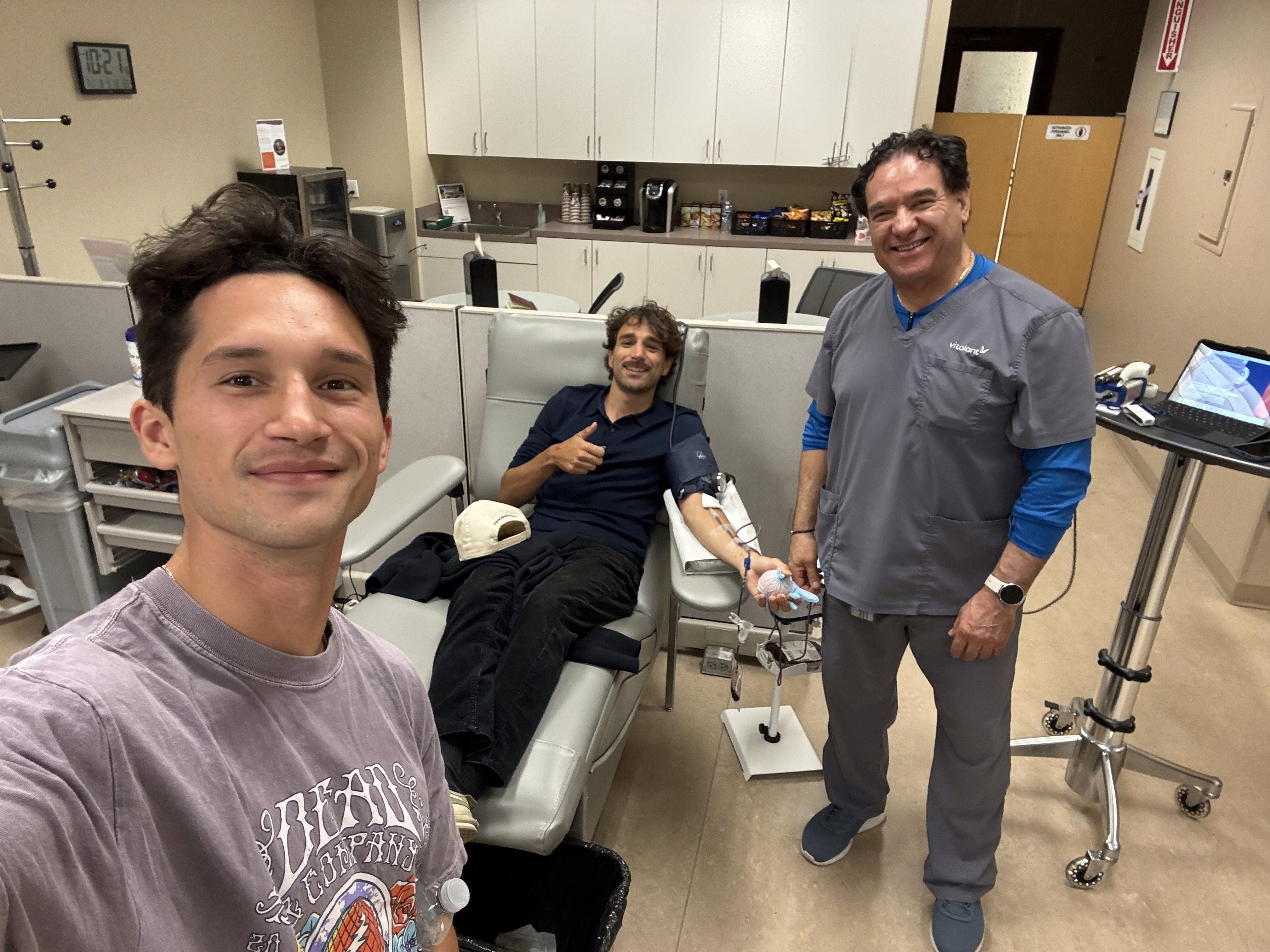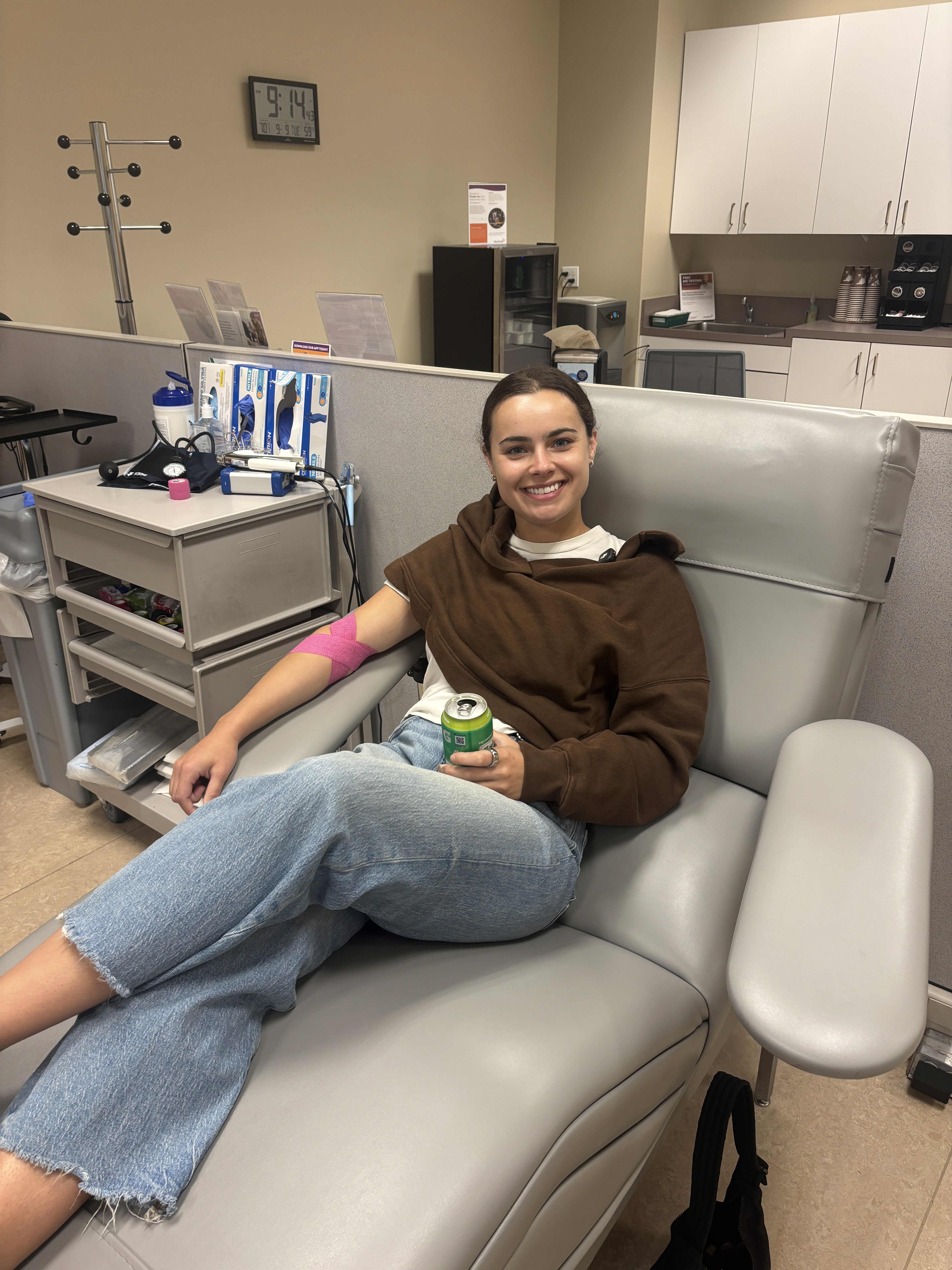


You get blood drawn on Tuesday morning. By Wednesday, the lab may already have a finalized result. By Friday, you are still staring at an empty portal and wondering what went wrong.
That gap is the part patients rarely get warned about.
Routine blood work often moves through the lab quickly. The slow part is often everything that happens after the analyzer is done. Results may wait for provider review, sit in an inbox, or post to a patient portal on a delay that has nothing to do with the test itself.
A lot of advice on blood test timing misses this distinction. It treats turnaround time as a lab question only. In practice, there are two timelines to track: analytic time inside the lab, and communication time between the finalized result and the moment you can see it.
If you understand that split, the whole system makes more sense. You stop reading a delay as a medical red flag and start seeing it for what it usually is: an information bottleneck. Modern testing platforms are getting better at removing that bottleneck, which matters just as much as lab speed if the goal is getting answers without the usual dead time.
Table of Contents
Why You're Still Waiting for Your Blood Test Results
You get blood drawn on Tuesday morning. By Thursday, the lab may already have the numbers. Yet you are still refreshing a portal on Friday night with no update, no call, and no clear answer about what is causing the delay.
That gap is the part people miss.
The question is usually framed as how long blood tests take, but the bigger variable is how long results take to reach you after the lab has done its part. Analytic time matters, but communication latency often matters more. A sample can be processed, reviewed, and technically complete while the patient still sees nothing because the result is sitting in a release queue, an inbox, or a clinician review workflow.
I tell people to ask a more precise question: has the lab finished the analysis, or has the result been released to me? Those are different milestones, and confusing them is why the waiting feels arbitrary.
Routine blood work usually comes back on a scale of days, not minutes. The variation in turnaround times comes from the system wrapped around the test. If the sample is collected at one site, transported elsewhere, reviewed by a separate lab team, routed to a physician office, and then posted only after staff signoff, the delay is no longer about chemistry. It is about handoffs.
Collection logistics play a role too. Where the sample is drawn often affects where it is processed and how quickly status updates move through the chain. That is one reason it helps to review local blood draw and processing options instead of treating every testing path as if it runs through the same pipeline.
The practical takeaway is simple. Your wait is often caused less by testing itself and more by a system that does a poor job showing you where the result stands. Modern platforms are getting faster by reducing that visibility gap, not by making the analyzer run at some radically different speed.
The Lab's Workflow From Blood Draw to Raw Data
A blood sample can be drawn in five minutes and still take far longer than expected to turn into visible information. The reason is simple. The tube has to survive a chain of handling steps before anyone has numbers worth reporting.
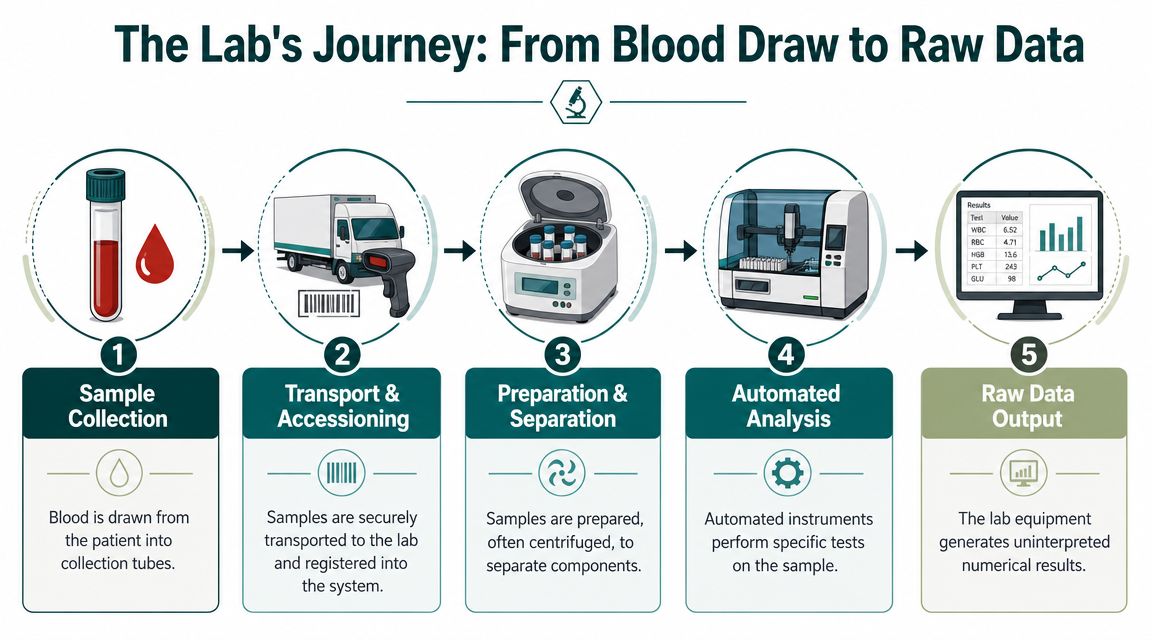
What happens after the needle comes out
After collection, the sample usually moves through a predictable operational sequence:
Collection and labeling. Staff use the right tube, match it to the order, and label it correctly.
Transport and accessioning. The sample is delivered to the lab, received, and logged into the laboratory information system.
Preparation. Many specimens need centrifuging, aliquoting, or other prep before the analyzer can read them.
Automated analysis. The instrument runs the ordered assay and checks against internal controls.
Raw data generation. The machine produces values, flags, and status markers that then enter review and reporting systems.
That last step is where people get confused. Raw data is not the same thing as a released result. A lab can have numbers in hand while the patient still sees nothing. If you want to understand why one testing path runs faster than another, it helps to compare actual partner blood center options, because collection site, courier routing, and processing lab all shape the timeline before the communication layer even starts.
Why common tests move faster
Labs are built around throughput. High-volume tests such as a CBC or basic chemistry panel fit standardized workflows, sit on instruments that run continuously, and usually require less special handling. That is why they tend to move through the analytic phase quickly.
Specialized assays follow a different path. They may need separate instruments, uncommon reagents, batched scheduling, or manual review if the signal is unclear or the result triggers a flag. The biology is only part of the timeline. The lab's operating model matters just as much.
I tell people to separate two questions. When did the analyzer finish, and when did the system convert that output into a report someone can access? Those are different events, and the gap between them is often larger than patients expect.
The fastest test is usually the one the lab runs all day, every day, with the fewest handoffs between collection, analysis, review, and release.
Factors That Influence Your Test Result Timeline
The baseline workflow explains the process. Actual wait times depend on what kind of test you ordered and how many extra handling steps get layered on top.
The biggest variables
Some delays are built into the assay itself. Others come from logistics.
Test complexity. Specialized biomarkers often need slower analytical methods or confirmation before release.
Send-out status. If a local lab doesn't run the assay in-house, transport and batching add time.
Batch schedules. Some tests aren't run continuously. They wait until enough samples accumulate.
Manual review. Interpretation flags or confirmation workflows can slow posting.
Timing of collection. Draws before weekends or holidays can sit longer in the queue.
Clinical guidance reflects that pattern clearly. Routine blood tests are often returned in roughly 72 hours, but HbA1c can take about a week, coeliac serology about 2 weeks, and vitamin D testing up to 3 weeks. Rapid point-of-care tests are the exception, with some results available in minutes.
If you're comparing timelines across health testing more broadly, this same throughput-versus-specialty pattern shows up outside blood work too.
Typical blood test turnaround times
Test Category | Examples | Typical Timeline |
|---|---|---|
Routine automated tests | CBC, common chemistry panels | 24 to 72 hours for routine blood tests; a CBC is often available within 24 hours |
Common broader panels | Comprehensive metabolic panel | 1 to 3 days |
Mid-complexity markers | HbA1c | About a week |
Specialty serology | Coeliac serology | About 2 weeks |
Nutrient specialty testing | Vitamin D | Up to 3 weeks |
Point-of-care testing | Rapid tests | Sometimes available in minutes |
For someone ordering basic hematology, a CBC with differential and platelet count is usually in the faster category. The mistake is assuming every blood test behaves like a CBC. It doesn't.
The Communication Gap Where Results Get Stuck
This is the part most articles miss. A result can be technically finished and still feel delayed because you don't have access to it yet.
When the lab is done but you still know nothing
The bottleneck is often communication latency, not analytic time in the lab. Once a result is finalized, it moves through a release and notification workflow. With GoodLabs, results are posted to your account as soon as they are available — GoodLabs is not the delay. If you are waiting longer than expected, the variable is almost always upstream: lab processing time, specimen handling, or the assay type itself.
That means there are two separate events:
The lab finalizes the result
The patient is allowed to see the result
Those events may happen close together. They may not.
A traditional provider workflow often looks like this: lab completes analysis, result goes to clinician queue, office staff sorts messages, provider reviews, patient gets a call or portal release later. None of that changes the actual biomarker value. It only changes when you can act on it.
If you're only measuring lab speed, you're missing the part patients actually experience.
Why patient access changes the experience
Direct digital access doesn't make every assay faster. What it does is remove unnecessary waiting after the lab has already done its job.
Goodlabs is a health platform that gives blood donors free clinical-grade lab panels (run at Quest or Labcorp), and offers the same panels at low cost to anyone who doesn't want to donate. In that kind of model, patient access is designed into the workflow from the start, with privacy handled through documents such as a HIPAA authorization process.
That's the contrarian point here. People think they need a faster lab. Often they need a shorter path between completed result and personal access.
How to Check Your Status and Get Results Faster
You can't force a specialized assay to finish instantly. You can reduce uncertainty and avoid preventable delays.
What to do in the traditional system
Start with the obvious tools, but use them correctly.
Check the right portal. If your blood draw was tied to a hospital system, use that portal first. If it was processed through a national lab, check the lab's patient portal too.
Ask one precise question. Don't ask "Are my results back?" Ask "Has the lab finalized the result, and if so, has it been released to me?"
Know when to follow up. Following up too early creates noise. Following up after the expected window has passed is reasonable.
Confirm the ordering path. Results ordered through one clinician don't always appear in the portal you usually use.
A lot of frustration comes from not knowing which entity currently holds the baton. Sometimes the lab has it. Sometimes the clinic does.
Ask for the stage, not just the status. "In process" can mean transport, analysis, review, or posting.
How direct access improves visibility
A cleaner workflow gives you more than speed. It gives you location awareness inside the process.

When a platform shows sample status clearly, the waiting period becomes less of a black box. That's useful even when the total turnaround hasn't changed much, because uncertainty is usually what drives the stress.
If you want the shortest path to visibility, look for systems that let you order, track, and receive results digitally without needing a phone-tree follow-up. If you're comparing options, you can book tests online through one such workflow instead of relying entirely on a traditional office relay process.
What doesn't work is passive waiting with no portal access, no timestamp visibility, and no clear owner of the next step. That's how a normal turnaround starts to feel abnormal.
Conclusion From Anxious Waiting to Empowered Action
Individuals inquiring how long blood test results take aren't really asking about analyzers. They're asking when they'll be able to stop wondering and start making sense of their data.
The answer is usually two-part. Common tests often move through the lab on a days-long timeline. The wildcard is what happens after that. Provider review queues, posting schedules, and communication handoffs are often the part that stretches the wait.
Once you understand that, the system becomes simpler to manage. You stop treating every delay as a medical mystery and start seeing the actual bottleneck. That shift matters because faster access isn't just about convenience. It helps you move from raw numbers to useful decisions sooner.
If you want a broader strategy for staying ahead of health drift instead of reacting late, this guide on the benefits of regular blood testing is a strong next read.
Blood test results are informational and not a medical diagnosis. Talk to your physician about what your results mean for you.
FAQs How Long Do Blood Test Results Take
Can blood test results come back the same day
Yes, some can. Common tests may be available in hours when the lab is in-house, but many routine blood tests still take 24 to 72 hours depending on workflow.
Why are my blood test results taking so long
The delay may not be the lab. Specialized assays, send-out processing, provider review, and portal posting can all slow when you see the result.
How long does a CBC take
A CBC is usually one of the faster tests. It is often available to the ordering clinician within 24 hours, especially in standard automated workflows.
Why can a vitamin D test take longer than routine labs
Because it's often handled as a more specialized assay. Clinical guidance notes vitamin D testing can take up to 3 weeks, which is much slower than routine panels.
When should I follow up about missing results
Follow up after the expected window has passed. Ask whether the lab has finalized the result and whether it has been released, rather than asking only if it's "back."
Goodlabs gives people a cleaner way to access clinical-grade blood testing, either free with qualifying blood donation or through low-cost direct ordering. If you want fewer blind spots between the blood draw and your actual results, explore Goodlabs.

Jake Kaiser
jakesjourney.co